How-Enterprise-Hardware-Solution-does-supports-your-IT-Infrastructure-techguru-Blog

How Enterprise Hardware Solutions does supports your IT Infrastructure?

How Enterprise Hardware Solutions does supports your IT Infrastructure?

Information technology is a cornerstone for managing modern organizations, influencing every aspect from customer service to operations, social media, and security. Enterprise hardware solutions integrate technology with business functions, optimizing growth and functionality. These solutions enhance workflow, acting as the backbone of infrastructure and improving customer service processes. This article outlines strategies for implementing enterprise hardware solutions to drive business growth and efficiency.

How Enterprise Hardware solutions affect your business –

Tech Guru IT Solutions offers a comprehensive range of cutting-edge server and storage systems, along with network equipment, to support customized hardware solutions for enterprises at affordable prices. Our Enterprise Hardware solutions include Dell Servers, Vaultize File Security, and Barracuda Email Security.Dell’s enterprise products feature a robust lineup of servers, storage, and networking solutions. These customer-inspired and future-oriented Dell servers deliver exceptional performance across small and medium-sized enterprises to large hyper-scale organizational environments.Furthermore, Dell Storage services provide economical resources with complete scalability, enabling users to expand storage as needed, aligning with business requirements, and intelligently managing data.

How does email hosting work

Email hosting services offer more than just a server for hosting emails; they provide additional solutions to help scale organizational operations effectively. These solutions include features for secure authentication, email rerouting and replication, user domain name management, and more. A trusted server from your email cloud services provider connects your email server with the recipient’s email server, ensuring efficient delivery and security by reducing spam and malware threats. Professional email hosting adds an extra layer of security when sending confidential information, with industry-standard encryption ensuring secure data transfer inaccessible to unauthorized parties. Superior uptime is also guaranteed, minimizing communication errors and delays, which is crucial for businesses that heavily rely on email for immediate consumer communications and actions. Professional business email hosting services are indispensable for organizations involved in frequent email exchanges requiring swift and secure communication.

Why Does Your Business Need Email Hosting?

In a fast-paced digital landscape, building a strong brand identity is crucial for making a lasting impression. Exceptional products and services are no longer enough to stand out; businesses must also create a recognizable and relatable brand. Email hosting plays a key role in establishing a credible and professional presence from the start. Customers value brands that prioritize data security, especially in today’s reliance on email for communication. Ensuring the safety of communication channels, regardless of message importance, builds trust and reliability, leading to increased customer satisfaction. Professional email service providers offer email encryption, guaranteeing secure data transmission that’s inaccessible to unauthorized users.

3 Key Features of Zimbra Email Server Hosting

Zimbra email server hosting solutions provide a comprehensive platform for managing contacts, emails, calendars, file sharing, and collaboration with users and clients seamlessly. Key daily tasks like automatic message sorting, document sharing, file editing, group scheduling, and instant messaging are streamlined with Zimbra hosting solutions. Moreover, Zimbra offers the convenience of offline access to emails, allowing you to work without an active internet connection. You can easily import emails and contacts to your Zimbra account by syncing it with Microsoft Exchange. Let’s delve into the three main features of Zimbra email server hosting:

Benefits of Zimbra Email Server Hosting for Businesses –

download (17)

Top 4 Benefits of Opting for Zimbra Email Server Hosting for Businesses

Top 4 Benefits of Opting for Zimbra Email Server Hosting for Businesses

Businesses today heavily depend on email communication for daily operations, making it a cornerstone for inter-team coordination and project management. To streamline email traffic, many organizations choose hosted email servers. A mail server acts as a central hub, receiving and delivering emails from client servers. Zimbra email server hosting stands out among various options due to its numerous advantages, making it a popular choice for businesses globally. This article explores the benefits of using email servers in detail. Keep reading to discover more.

What is email hosting?

Email hosting is a service that enables organizations and individuals to send and receive emails using their own domain name, rather than relying on free email services like Gmail or Yahoo. With cloud email hosting, you can create email addresses for your employees or yourself using your domain name and access them via a web-based client or email software like Microsoft Outlook. You can choose between a shared server or a dedicated email server, with the latter being favored by large businesses handling high email volumes daily. Business email solutions often come with extra features such as spam filtering, virus protection, and support for large attachments, making them more reliable and secure compared to free email services. Email hosting is beneficial for those wanting a professional email address matching their domain or seeking greater control over email hosting and setup. These services can be provided by your website hosting company or a separate email hosting provider.

How does email hosting work

Email hosting services offer more than just a server for hosting emails; they provide additional solutions to help scale organizational operations effectively. These solutions include features for secure authentication, email rerouting and replication, user domain name management, and more. A trusted server from your email cloud services provider connects your email server with the recipient’s email server, ensuring efficient delivery and security by reducing spam and malware threats. Professional email hosting adds an extra layer of security when sending confidential information, with industry-standard encryption ensuring secure data transfer inaccessible to unauthorized parties. Superior uptime is also guaranteed, minimizing communication errors and delays, which is crucial for businesses that heavily rely on email for immediate consumer communications and actions. Professional business email hosting services are indispensable for organizations involved in frequent email exchanges requiring swift and secure communication.

Why Does Your Business Need Email Hosting?

In a fast-paced digital landscape, building a strong brand identity is crucial for making a lasting impression. Exceptional products and services are no longer enough to stand out; businesses must also create a recognizable and relatable brand. Email hosting plays a key role in establishing a credible and professional presence from the start. Customers value brands that prioritize data security, especially in today’s reliance on email for communication. Ensuring the safety of communication channels, regardless of message importance, builds trust and reliability, leading to increased customer satisfaction. Professional email service providers offer email encryption, guaranteeing secure data transmission that’s inaccessible to unauthorized users.

3 Key Features of Zimbra Email Server Hosting

Zimbra email server hosting solutions provide a comprehensive platform for managing contacts, emails, calendars, file sharing, and collaboration with users and clients seamlessly. Key daily tasks like automatic message sorting, document sharing, file editing, group scheduling, and instant messaging are streamlined with Zimbra hosting solutions. Moreover, Zimbra offers the convenience of offline access to emails, allowing you to work without an active internet connection. You can easily import emails and contacts to your Zimbra account by syncing it with Microsoft Exchange. Let’s delve into the three main features of Zimbra email server hosting:

Benefits of Zimbra Email Server Hosting for Businesses –

web-speed-optimizing

Frequently Asked Questions About Optimizing Website Speed

Frequently Asked Questions About Optimizing Website Speed

Web users no longer tolerate slow websites, especially with the availability of high-speed internet connections in offices, homes, and even on the go. Slow website performance is unjustifiable in today’s digital landscape. For WordPress websites, monitoring loading times is crucial. Optimizing load times enhances user experience and prevents visitors from turning to competitors. The initial step should involve hiring a reliable web hosting company like Tech Guru IT Solutions in Delhi, offering various web hosting packages, including dedicated web hosting. Below, we address three frequently asked questions about enhancing website load speed and conversions.

1. What is a good page load time?

Research shows that 47% of consumers anticipate websites to load within two seconds. Furthermore, 40% of users are inclined to abandon pages that take three seconds or longer to load. If your site exceeds the three-second mark, nearly half of your visitors may depart before accessing it. Poor website load times can deter visitors from returning in the future. In another survey, 79% of customers stated they would not revisit a website with poor performance.

2. Why is my website slow?

Numerous factors can contribute to your site’s slow loading time, ranging from server capacity to image size and the quantity of redirects. This implies that there are several measures you can take to enhance page speed. According to Yahoo, downloading different elements of a web page, including graphics, stylesheets, and scripts, accounts for 80% of the load time. Each of these elements necessitates an HTTP request, so the more on-page components present, the longer it takes for the website to load.

3. How do I speed up my website in 2022?

Here are the three things you can do to improve your website’s loading speed.

Choose the right hosting for your needs

Web hosting companies vary in performance levels, with shared plans suitable for certain needs and more advanced options like dedicated web hosting required for others. Tech Guru IT Solutions, a leading data center company in Delhi, provides access to experienced advisors and offers a variety of tailored web hosting plans in India.

Asynchronous loading

To improve your website’s speed and increase conversions, optimizing the loading of certain files on your pages is essential. CSS and JavaScript scripts can load in two ways: synchronously or asynchronously. Synchronous loading occurs sequentially, one after another, following the order on the page. Conversely, asynchronous loading allows some scripts to load simultaneously, aiding faster page loading.

Minify and combine files

Minifying and combining files, particularly HTML, CSS, and JavaScript files, is a critical step in optimizing your website. These files play a vital role in determining the website’s appearance and contribute to the number of queries the website makes with each visit. Minifying and consolidating these files reduce the number of queries, as well as the size of each file and the total number of files. This is especially important for websites built using templates, as templates can sometimes generate inefficient code that slows down the site.

Final Word

Tech Guru IT Solutions is your go-to solution for web hosting. With almost two decades of experience, Tech Guru IT Solutions has been assisting client organizations in optimizing their IT operations through a range of dedicated hosting services. Our industry expertise, dedication, and unmatched experience have positioned us as one of the leading data center companies in India. No matter if you require Linux cloud hosting or Windows hosting, we have got you covered. To learn more about our services, fill out our contact form or call +91-8800567676 or email care@techguru.co.in.
Server racks in server room cloud data center. Datacenter hardware cluster. Backup, hosting, mainframe, mining, farm and computer rack with storage information. 3D rendering. 3D illustration

4 Essential Services a Data Center Service Provider Must Offer

Essential Services a Data Center Service Provider Must Offer

For many businesses, constructing and maintaining a scalable, secure, and highly available data center for core applications is prohibitively expensive. Obtaining funding for new IT equipment is challenging enough, let alone funding a data center’s construction and operations or upgrading existing facilities. Most businesses prefer to allocate their limited resources toward innovation and growth rather than operational and infrastructure costs. Opting for an efficient data center solutions provider presents an economically feasible solution for businesses to manage large databases and access agile IT infrastructure that scales with customer demands and business needs. Leading data center companies in India, such as Tech Guru IT Solutions , have expanded their offerings beyond mere data center facilities to include a diverse range of managed services. Let’s explore four essential services that a data center service provider should offer to clients.

1. Managed Hosting Services

Managed hosting services provided by data center service providers enable them to host clients’ servers, operating systems, storage, networks, and databases, alleviating clients from data center infrastructure expenses. With managed hosting services, clients pay a fixed monthly fee, offering predictability in costs, and can also address IT skill gaps within their organization.

2. Managed IT Services

IT companies face constant pressure to deliver quickly and stay ahead of data security threats. Hiring a diverse range of skilled staff for evolving IT architecture and applications can be costly. Managed IT services offer a solution by allowing you to outsource day-to-day operations related to your IT infrastructure, reducing the need for in-house staff and lowering operational costs while improving efficiency.

3. Managed Security Services

Enterprises are confronted with an overwhelming array of daily data security threats and must also ensure compliance to meet service-level agreements (SLAs) that demand substantial resource allocation. Engaging a data center service provider that offers data security services can assist in compliance maintenance and safeguarding sensitive consumer data at a nominal cost compared to hiring in-house staff.

3. Managed Security Services

Migrating databases from an in-house server to a data center server necessitates careful planning and execution to prevent delays and errors. During the transition to a new environment, it’s crucial to verify compatibility of each facility component with your requirements and readiness to accommodate your infrastructure from the outset. Engaging a data center service provider can aid in devising efficient migration methodologies that align with their data center components, ensuring a smooth migration process.

Final Word

A data center is a long-term investment, which may cost you more to move out than it costs to move in. It is important to remain mindful of your long-term business goals when choosing a data center service provider. Tech Guru IT Solutions is one of the top data center companies in India, offering comprehensive data center solutions to clients and helping them handle database management issues more efficiently. Our data center services are cost-effective and offer instant scalability because of first-hand ownership. Talk to our team of seasoned experts by calling +91-8800567676, or email care@techguru.co.in.
How-to-Build-a-Cloud-Computing-Infrastructure-techguru-Blog

How to Build a Cloud Computing Infrastructure?

How to Build a Cloud Computing Infrastructure?

To establish a dedicated cloud infrastructure, certain essential requirements must be met. Opting for top-tier hosting providers is crucial as significant resources are invested in this endeavor. This blog will delve into the process of building your cloud computing infrastructure and explore the transformative impact the cloud can have on your business. Let’s dive in.

Why cloud is the future?

Cloud computing infrastructure provides instant access to robust resources, enabling businesses to respond swiftly to evolving market dynamics compared to traditional legacy infrastructure. Amazon Cloud Support services can optimize your DevOps processes, enhancing software development and deployment for continuous integration (CI) and continuous delivery (CD). The cloud serves as a pivotal technology for digital transformation, particularly in light of widespread adoption of 5G, Internet of Things (IoT) devices, and latency-sensitive applications, driving the demand for cloud infrastructure.While physical data centers concentrate information in one location, many rural areas still lack access. Cloud infrastructure offers a distributed approach, bringing processing and data closer to users. This strategy reduces latency, lowers bandwidth costs, and enhances connection performance, fueling rapid cloud adoption.According to NetApp, global spending on public cloud computing is projected to grow at a 20.4% annual rate, reaching $600 billion by 2023. The allure of cloud services is undeniable, with dedicated cloud infrastructure standing out as a pivotal asset in this transformative journey.

Benefits of possessing cloud infrastructure

Cloud technology creates a virtual office, offering the flexibility to access your business and resources from anywhere, at any time. In today’s business landscape, with the proliferation of web-enabled devices, cloud technology enhances data accessibility. However, let’s delve into the three primary advantages of investing in cloud infrastructure:

Reduced IT costs

You can cut down on business expenses by leveraging the resources provided by your cloud server infrastructure provider, avoiding the need to purchase costly systems and equipment. This leads to reduced operating costs, as outlined below.

Superior scalability and flexibility

Your company can seamlessly adjust its operations and storage needs to match its requirements, providing the flexibility to adapt as needed. Your cloud computing service provider handles all upgrades and adjustments, eliminating the need for costly self-installation. Embrace the cloud for simplified management and scalability.

Seamless remote collaboration

Cloud computing enables your company to collaborate more efficiently, utilizing streamlined channels for communication and information sharing. Your employees, contractors, and third parties can access the same files in real time, fostering seamless collaboration. This is especially beneficial for projects involving developers from diverse locations, eliminating productivity barriers.

Defining your requirements

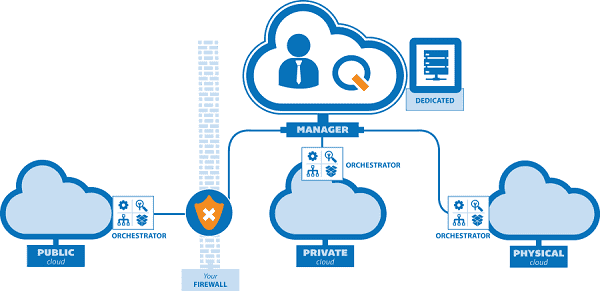
To outline your cloud infrastructure needs, start by identifying your business use cases. Depending on the service or product you’re developing, you can opt for private, public, hybrid, or multi-cloud solutions. Let’s explore the distinctions between them.

Private cloud

To outline your cloud infrastructure needs, start by identifying your business use cases. Depending on the service or product you’re developing, you can opt for private, public, hybrid, or multi-cloud solutions. Let’s explore the distinctions between them.

Public Cloud

Public clouds are cloud environments typically built from IT infrastructure not initially owned by the end user. They become public clouds when these environments are partitioned and shared among multiple tenants. While public clouds traditionally operated off-site, modern public cloud providers now offer services within clients’ on-site data centers. Amazon Web Services remains one of the world’s largest public cloud providers.

Hybrid cloud

A hybrid cloud comprises multiple interconnected environments linked by LANs (Local Area Networks), WANs (Wide Area Networks), VPNs (Virtual Private Networks), and/or APIs (Application Programming Interfaces), creating a unified IT environment.

Multi-cloud

A multi-cloud architecture involves using multiple cloud services from different public or private cloud providers. While all hybrid cloud setups are multi-cloud, not all multi-cloud setups are hybrid clouds.

Designing A Cloud Computing Strategy

For starters, it’s crucial to design a strategy that will help you achieve what you want. To help you design a winning cloud computing strategy, we have explained the necessary steps below:–

Final Word

Toward a cloud infrastructure, Virtualization is the first step. It is important to re-evaluate the suitability of each critical layer of the architecture for inclusion in the new infrastructure model. An investment will require for building cloud infrastructure, if not in solutions or hardware, then in time and effort. Automation, reconfiguration, and integration will require significant IT resources to accomplish. Now, we are sure that you want to build a cloud infrastructure. When looking for a reliable dedicated cloud infrastructure or cloud computing infrastructure service provider in India, look no further than Tech Guru IT Solutions . Discuss your requirements and get answers to all your questions today at +91-8800567676, or email care@techguru.co.in. or fill out our contact form, and we will get back to you at the earliest.
webhosting

Comparison Between Cloud Web Hosting and Traditional Web Hosting

Comparison Between Cloud Web Hosting and Traditional Web Hosting

Web hosting is essential for businesses with an online presence. Traditional web hosting involves hosting on physical servers or shared servers, while cloud hosting utilizes virtual servers distributed across a network.Traditional hosting is often cost-effective, but it may have limitations in scalability and can be prone to downtime. This type of hosting is suitable for smaller websites or businesses with predictable traffic patterns.Cloud hosting, on the other hand, offers greater scalability, flexibility, and reliability. It distributes resources across multiple servers, ensuring that your website can handle spikes in traffic without performance issues. Additionally, cloud hosting providers typically offer advanced security features such as automated backups, encryption, and robust monitoring tools.

Cloud Web Hosting and Traditional Web Hosting: Does it Make a Difference?

Selecting the appropriate hosting is crucial for ensuring the speed and security of a website. Business owners frequently grapple with the decision of whether to transition their website from traditional hosting to cloud hosting. However, there is no straightforward answer to this question due to the multitude of factors to consider. It is safe to conclude that the decision between cloud web hosting and traditional web hosting hinges on individual needs and objectives. So, what sets cloud web hosting apart from traditional web hosting?

Infrastructure: Cloud hosting relies on a network of servers across various locations for hosting websites, whereas traditional hosting is based on a single server or a group of servers situated in one location. This distinction significantly impacts the performance and reliability of the hosting solution.

Scalability: Cloud hosting enables effortless scaling of your website’s resources, while traditional hosting usually entails buying a set amount of resources that may not suffice during unexpected traffic surges.

Cost: While traditional hosting typically requires you to pay a fixed monthly or annual fee, regardless of your resource usage, the opposite is true for cloud hosting. When you opt for cloud-based servers, you don’t need to commit to specific resource bandwidths upfront. Instead, you can scale up or down as per the changing needs of your business.

Maintenance: Cloud hosting providers commonly manage maintenance and updates for the hosting infrastructure, whereas with traditional hosting, you’re responsible for handling these tasks yourself.

When is the Right Time to Move From Traditional Web Hosting to Cloud Web Hosting?

It can often be confusing to ascertain the right time for your business to move from traditional web hosting to a cloud-based service. In this section, we will discuss several factors to consider in order to make the right decision:

Traffic patterns: Cloud hosting can be a cost-effective choice for websites or software with fluctuating traffic patterns, such as seasonal spikes or irregular traffic, as it enables you to pay solely for the resources utilized.

Performance: Cloud hosting could be an excellent option if you’re facing performance issues like slow loading times or downtime with your current hosting solution. Leading cloud server hosting providers offer advanced infrastructure that can elevate your business without requiring expensive hardware investments.

Future growth: Cloud hosting is a suitable option if you anticipate substantial business growth in the near future, as it enables seamless resource scaling according to your needs.

Reliability: For mission-critical websites where downtime is unacceptable, cloud hosting is an ideal choice due to its high availability ensured by multiple servers strategically located across different regions.

Security requirements: In today’s all-digital environment, web security has become more critical than ever. If you want access to advanced security to protect your data and prevent unauthorized access, it is advisable to go for reputable cloud backup solutions.

Biggest Advantages of Cloud Hosting

Trend 4: Data Analytics & Data Engineering

It goes without saying that cloud hosting comes with a plethora of benefits for businesses of all sizes. Here are some of the biggest advantages of cloud hosting:

  • The best cloud hosting service allows you to easily scale up or down the resources of your website, such as CPU, RAM, and storage, depending on the needs of your application. This helps to ensure that your website can handle sudden spikes in traffic without crashing or downtime.
  • Cloud hosting services like AWS website hosting allow you to only pay for the resources you use. This feature can be especially useful for start-ups that aren’t sure of the traffic they can expect in the coming months.
  • Cloud server providers ensure the high availability of resources by distributing your website across multiple servers in different locations. This ensures that your website is always available, even if one of the servers goes down. This particular feature can be useful for businesses that need to ensure a 24x7x365 online presence.
  • Cloud hosting allows you to choose the resources you need, such as the operating system, programming languages, and databases, making it easy to customize your hosting environment to meet your specific needs.
  • Cloud hosting providers generally have robust security measures in place to protect your data. These measures include encryption, firewalls, and regular security updates, among others.

Trend 5: Automation

In 2023, Managed IT Services are on the brink of another revolutionary shift with the emergence of automation. As businesses press for heightened efficiency and flexibility, automation emerges as a robust remedy for streamlining operations, curtailing manual chores, and refining workflows. Managed IT service providers progressively incorporate automation technologies, including robotic process automation (RPA) and intelligent process automation (IPA), within their service arrays. These automated resolutions proficiently manage repetitive tasks, enhance precision, and liberate invaluable human resources to be directed toward more strategic ventures.
Furthermore, the reach of automation surpasses routine duties, as AI-driven automation paves a path for astute decision-making and autonomous IT remediation. The assimilation of automation into Managed IT Services not only bolsters productivity but also fosters cost efficiency and accelerates time-to-market for enterprises. With automation’s sustained advancement, organizations can harness its potential to galvanize innovation and maintain an edge in the swiftly evolving digital landscape of today.

Final Word

Attaining success as a Managed Service Provider (MSP) requires unwavering commitment, spanning from the initial assessment to contract finalization and continuous service oversight. Maintaining an edge in line with industry trends becomes pivotal, enabling MSPs to seize opportunities quicker than their rivals. If you need a dependable Managed IT Service Provider, consider Tech Guru IT Solutions —an experienced contender in the field, boasting twenty years of proficiency in seamlessly integrating and overseeing both cloud and conventional infrastructures. Tech Guru IT Solutions  presents a comprehensive array of offerings, encompassing integrated managed infrastructure services, intelligent cloud automation services, solutions for cloud deployment, choices for cloud backup, seamless customizations without code, services for IT monitoring, managed solutions for data centers, and more. For top-tier Managed IT Services, reach out to us at +91-8800567676, or email care@techguru.co.in. You may also fill out our contact form and let Tech Guru IT Solutions  be your trusted partner in elevating your IT infrastructure to new heights.